It is one of those questions people think about but rarely ask out loud. You walk into a portable restroom at an event or a job site and it is clean, stocked, and smelling okay. But how did it get that way? And how does it stay that way over a full rental period?
Understanding how are porta potties cleaned is actually pretty useful knowledge, especially if you are renting units for a project or event and want to make sure your guests and workers always walk into a decent experience.
So let us get into it, step by step.
What Is Actually Inside a Porta Potty
Before we talk about cleaning, it helps to understand what you are working with. A standard portable toilet has a few key parts: the toilet seat and bowl, the waste tank underneath, a hand sanitizer dispenser, a toilet paper holder, and the walls and floor of the unit itself.
The waste tank sits below the seat and collects everything that goes into it. It holds a mix of waste and a blue chemical solution that breaks down solid waste, controls odor, and adds that familiar blue tint you have probably noticed. The tank on a standard unit typically holds somewhere between 50 and 60 gallons, which is designed to handle a reasonable volume of use between service visits.
When a unit is not cleaned and serviced on a proper schedule, the tank fills up, the chemicals get overwhelmed, and the whole experience goes downhill fast. Regular servicing is what keeps that from happening.
The Cleaning Process: Step by Step
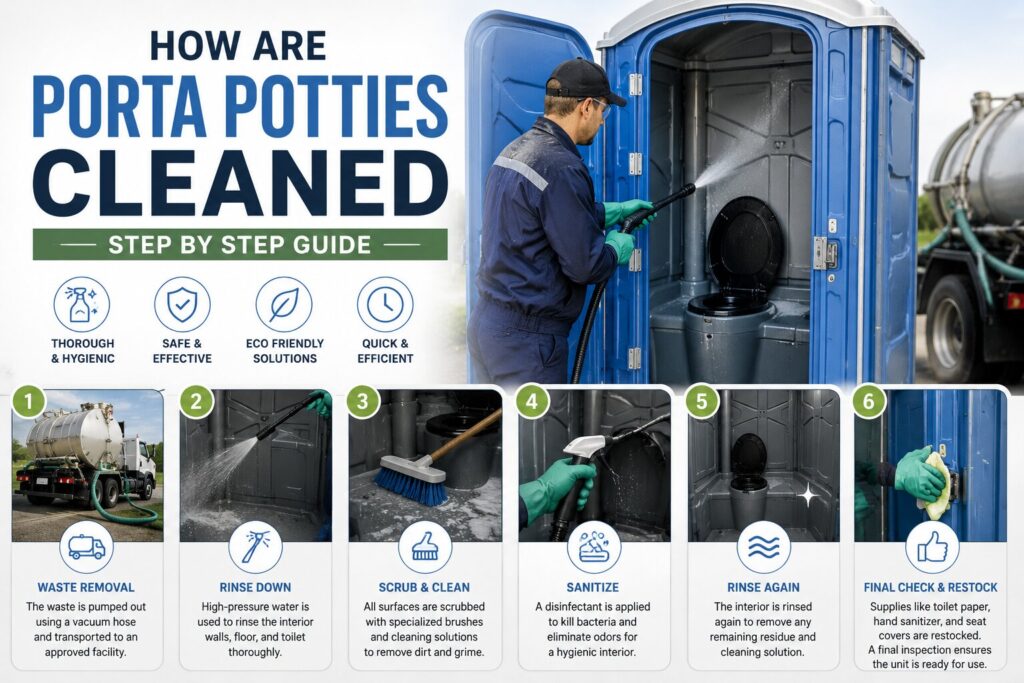
When a service technician shows up to clean a portable toilet, they follow a specific process to make sure the unit is fully reset and ready for continued use. It is more thorough than most people expect.
Step 1: Pumping Out the Waste Tank
The first thing that happens is the waste gets pumped out. The technician connects a vacuum hose to the tank and the contents are suctioned into a holding tank on the service truck. This is similar to how a septic tank gets pumped, just on a smaller and more mobile scale.
The vacuum removes nearly all of the liquid and solid waste from the tank, leaving it essentially empty. This step alone makes the biggest difference in odor control and overall cleanliness.
Step 2: Rinsing the Tank and Bowl
Once the tank is emptied, fresh water is sprayed into the tank and through the bowl to rinse out any remaining residue. This rinse water is also suctioned out, leaving the interior of the tank clean before new chemicals are added.
Some service teams also use a pressure washer or scrubbing tools on the bowl itself to remove any buildup that the rinse water does not fully clear. This is especially common for units that see heavy use.
Step 3: Adding Fresh Deodorizer and Chemicals
After the tank is pumped and rinsed, fresh chemical solution is added. This is the blue deodorizing liquid you see in the bowl. It serves multiple purposes at once. It breaks down waste, controls bacteria, neutralizes odor, and makes the unit more hygienic between visits.
The amount added depends on the size of the tank and how much usage is expected before the next service visit. Higher traffic units get a more generous dose to carry them through to the next cleaning.
Step 4: Cleaning the Interior Surfaces
The walls, floor, seat, and door of the unit are wiped down or sprayed with a disinfectant cleaner. This removes any splatter, fingerprints, or surface dirt that has built up since the last service visit.
This is the step that makes the biggest visual difference. A unit that smells okay but has dirty walls and a grimy floor still feels unpleasant to use. Proper surface cleaning is what gives a well-maintained unit that fresh, usable feel.
Step 5: Restocking Supplies
Once the cleaning is done, the technician restocks toilet paper and refills the hand sanitizer dispenser. If the unit has a separate handwashing station, that gets checked and refilled as well.
Some providers also do a quick check of the door latch, the vent, and the overall structural condition of the unit during this step. Any damage or mechanical issues get flagged for repair or replacement.
How Often Should Units Be Cleaned
Cleaning frequency depends on how many people are using the unit and over what period of time. A unit sitting at a low-traffic job site with a handful of workers does not need the same attention as one at a weekend festival with hundreds of guests cycling through.
| Usage Level | Recommended Service Frequency |
|---|---|
| Low traffic, under 10 users per day | Once per week |
| Moderate traffic, 10 to 30 users per day | Once or twice per week |
| High traffic, 30 to 60 users per day | Two to three times per week |
| Event usage, large crowd, single day | Before and after the event |
| Multi-day event, large crowd | Daily servicing before opening |
For most standard construction site rentals, once-a-week servicing fits the bill. For events or busy sites, you want to have that conversation with your provider upfront so the schedule actually matches your usage.
What Happens to the Waste
This is the part people are often curious about but rarely ask. After the waste is pumped into the service truck’s holding tank, it gets transported to a licensed waste treatment facility. There, it goes through the same treatment process as regular municipal sewage.
The Environmental Protection Agency (EPA) has regulations that govern how portable sanitation waste must be handled and disposed of. Reputable rental providers follow these guidelines carefully, and the waste that comes out of a porta potty is treated and processed responsibly rather than just dumped somewhere.
This is one reason it matters to work with a licensed and established rental company. Proper waste disposal is not just a courtesy, it is a legal and environmental obligation.
What Makes a Unit Smell Bad
Even with regular servicing, there are a few things that can cause a unit to smell worse than it should between visits. Knowing what drives odor helps you set up your rental in a way that keeps things as fresh as possible.
Direct sunlight: A porta potty sitting in full afternoon sun heats up fast. The warmer the interior, the faster bacteria grows and odor builds. Placing units in shaded spots makes a measurable difference.
Overuse between service visits: When more people use a unit than it was designed to handle in a given period, the chemicals get overwhelmed before the next cleaning. Adjusting your unit count or service frequency fixes this.
Ventilation: Most units have a vent pipe on the roof. If it is blocked or if the unit is placed in a spot with no airflow, odor builds up inside. Placement in open areas helps the vent do its job.
Improper use: Items that are not meant to go into a porta potty, like food waste, bottles, or cleaning materials, can disrupt the chemical balance and accelerate odor. A simple sign on the door goes a long way.
Frequently Asked Questions
How long does a service visit take?
A standard service visit for a single unit takes about 15 to 20 minutes from start to finish. Larger orders with multiple units take longer depending on the number of units and their placement on site.
Can I request extra cleaning visits if my unit is getting heavy use?
Yes, and you should. Most providers offer flexible servicing schedules and can accommodate additional visits if your usage level changes. It is always better to ask upfront and build it into your agreement rather than waiting until there is a problem.
Are the chemicals used in porta potties safe?
Yes. The deodorizing chemicals used in modern portable toilets are formaldehyde-free and designed to be safe for users and the environment. They are specifically formulated for portable sanitation use and go through the same regulated treatment process as regular wastewater after disposal.
Do restroom trailers get cleaned the same way?
Restroom trailers are cleaned similarly but have a few additional steps. Because they have sinks with running water and sometimes climate control systems, the cleaning process includes servicing those components as well. The waste tank is still pumped and refilled with fresh chemicals the same way.
What should I do if a unit needs attention between scheduled service visits?
Call your rental provider as soon as you notice the issue. A good provider will respond quickly and send a technician for an unscheduled visit if necessary. Bay Area Sanitation offers responsive support so you are never left managing a problem on your own.
Clean Units Start with the Right Provider
Now you know exactly what goes into keeping a portable restroom clean and functional. It is a real process, done on a real schedule, by trained technicians who take it seriously. When it is done right, the results speak for themselves.
Bay Area Sanitation services units across Oakland, San Francisco, San Jose, Alamo, and the full Bay Area region. Whether you need reliable weekly servicing for a construction site or spotless units delivered fresh for a single-day event, their team has you covered from the first drop-off to the final pickup.
Schedule Your Porta Potty Service with Bay Area Sanitation Today | Get a Cleaning and Rental Quote for Your Site or Event
Bay Area Sanitation | Proudly Serving the Bay Area
External Sources: 1. U.S. Environmental Protection Agency, Wastewater Treatment and Sanitation: https://www.epa.gov/npdes/sanitation-wastewater 2. Portable Sanitation Association International, Industry Standards and Best Practices: https://www.psai.org/