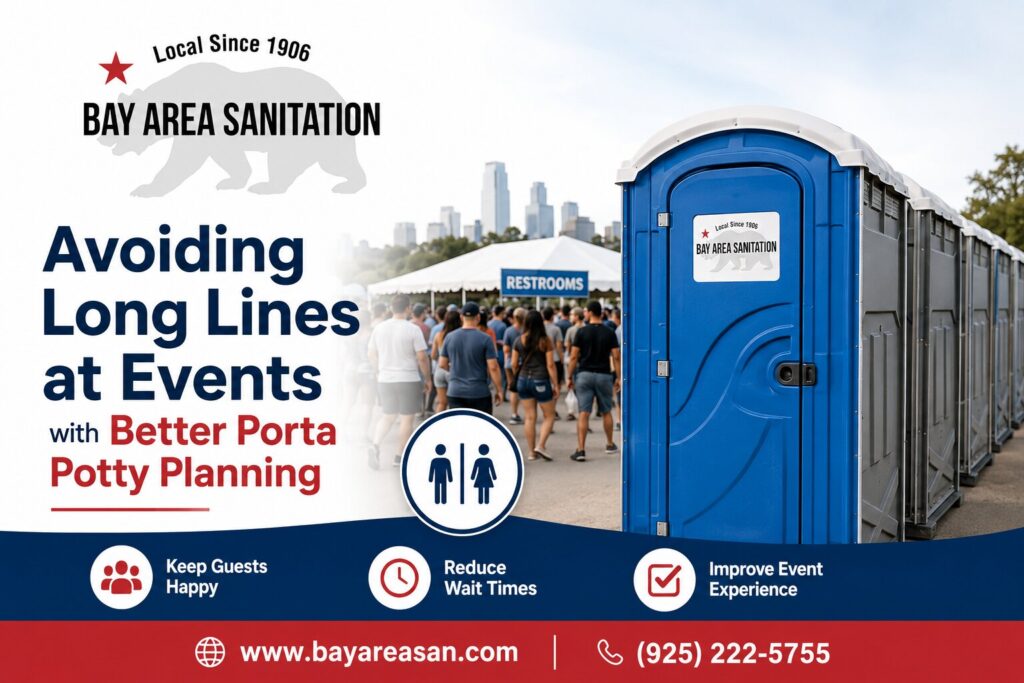
Nothing ruins an event experience quite like a long restroom line. People miss performances, leave food and drink stations, and get frustrated fast when they are stuck waiting. And more often than not, the problem is not the units themselves. It is the planning, or the lack of it.
Good event porta potty planning is one of those things that most organizers underestimate until they get burned by it. The right number of units in the right places, serviced at the right times, makes all the difference between a smooth event and a logistical nightmare.
This guide is here to help you get it right from the start.
Why Lines Form in the First Place
Long lines at portable restrooms come down to a few consistent causes. Too few units is the most obvious one, but placement and timing play just as big a role as the actual unit count.
When all the restrooms are clustered in one corner of the venue, people from the other side have to walk farther. That means longer round trips, slower turnover, and a crowd that keeps building at the single restroom cluster while the rest of the venue sits empty. Poor placement alone can create the appearance of a shortage even when you have enough units on paper.
Add in a peak usage period, like the end of a headlining act or the break between sessions at a conference, and a manageable line can turn into a 20-minute wait in just a few minutes. Understanding these pressure points ahead of time is what separates a well-planned event from a chaotic one.
Start with the Right Unit Count
Getting the numbers right is the foundation of solid event porta potty planning. There is no single formula that works for every event, but there are reliable starting points that most sanitation professionals use.
The Portable Sanitation Association International (PSAI) recommends one toilet per 50 guests for events lasting up to four hours. That ratio changes as the event gets longer or if alcohol is being served. Events with a bar see significantly higher restroom usage, and that needs to be reflected in your unit count.
For events lasting six hours or more, plan closer to one unit per 35 to 40 guests. It is always better to have a couple of extra units sitting lightly used than to have lines snaking across your venue because you came up short.
Unit Count Planning Guide
|
Event Type |
Guests | Event Duration | Recommended Units |
| Community fair, no alcohol | 200 | 4 hours | 4 units |
| Outdoor concert with bar | 300 | 6 hours | 8 to 10 units |
| Corporate outdoor event | 150 | 4 hours | 3 units |
| Music festival, all day | 500 | 8 to 10 hours | 14 to 18 units |
| Wedding, outdoor venue | 100 | 5 hours | 3 to 4 units |
| Marathon or charity run | 400 participants | Half-day |
8 to 12 units |
These are starting points. Your provider can help you fine-tune the count based on specifics like the age range of attendees, the type of food and drink being served, and whether handwashing stations are being added separately.
Place Units Where People Actually Are
This is where a lot of event organizers get it wrong. They pick a spot on the venue map that seems logical, cluster all the units there, and call it done. But the goal is to put units where people already are, not where it is most convenient to drop them off.
Think about how your event layout flows. Where will people spend most of their time? Where are the food and beverage stations? Where does the crowd naturally gather? Those are the spots that need restroom access nearby.
A good rule of thumb is to break your venue into zones and make sure each zone has its own restroom cluster. This reduces the distance people need to walk and distributes traffic more evenly across all your units. Shorter walks mean faster turnover and shorter lines for everyone.
Placement Tips by Venue Zone
| Zone | Placement Advice |
| Main stage or activity area | Place a cluster within easy walking distance |
| Food and beverage stations | Keep units at least 20 feet away but nearby |
| Entry and exit points | Always have a few units near the entrance |
| VIP or premium sections | Consider upgraded or flushable units here |
| Parking areas | Useful for early arrivals and late departures |
For events in Oakland, San Francisco, and Alamo, venue layouts and local regulations can also affect where units can be placed. Working with a provider who knows the area makes this part of the process a lot smoother.
Plan for Peak Usage Periods
Even with the right number of units spread across your venue, lines will form during peak periods if you are not ready for them. Peak usage happens at predictable times: the break between sets, the end of a keynote speaker, the halftime of a game, or right after a meal period ends.
During these windows, restroom demand can spike dramatically in a short time. The best way to handle this is to make sure your units are freshly serviced going into those windows and that you have a few extra units positioned in the highest-traffic areas to absorb the surge.
If your event has a clear schedule, share it with your rental provider. A good provider will plan their servicing visits around your event flow so tanks are pumped and supplies are restocked before your busiest periods, not during them.
What Our Customers Say About Bay Area Sanitation
Sandra M., Event Producer, Oakland, CA “I have organized large outdoor events in Oakland for years and restroom lines have always been my biggest headache. Since switching to Bay Area Sanitation, that has completely changed. They helped me rethink my layout and suggested the right number of units for our crowd size. If you need a reliable porta potty rental Oakland CA partner who actually understands event flow, look no further.”
James L., Venue Coordinator, San Francisco, CA “We hosted a multi-day outdoor market in San Francisco and needed a provider who could handle daily servicing and last-minute adjustments. Bay Area Sanitation delivered on every front. The units were clean, the pickups and drop-offs were on schedule, and they were responsive whenever we needed them. For portable toilet rental San Francisco, these are the people I trust.”
Karen T., Community Organizer, Alamo, CA “Our annual outdoor fundraiser draws a big crowd and we were always scrambling with sanitation. Bay Area Sanitation walked us through the whole planning process and made it simple. The placement suggestions alone made a huge difference in how smoothly things ran. Best portable restroom rental Alamo CA experience we have had by far.”
Add Handwashing Stations to Your Setup
Portable restrooms handle the waste side of sanitation, but handwashing is its own separate need. Many health departments require handwashing stations near food service areas at permitted events, so this is worth checking into before your event day arrives.
Even where it is not required, standalone handwashing stations are a smart addition. They keep restroom lines from backing up because people do not have to step back inside a unit just to wash their hands. They also give you the flexibility to place hand hygiene options in areas where full porta potty units would not fit.
Talk to your provider about pairing handwashing stations with your porta potty order. Most providers offer them as an add-on and it is a simple way to round out your sanitation setup.
Schedule Servicing Around Your Event, Not Around a Calendar
Standard porta potty rentals come with once-a-week servicing. That is fine for a low-traffic construction site. For a major event, it is nowhere near enough and it is also poorly timed if the service visit does not fall on the right day.
For any event with more than 100 guests, arrange for servicing the morning of the event so all units are fresh when doors open. For multi-day events, daily morning servicing keeps things from deteriorating over time. If you expect extremely high traffic, ask about a mid-day service visit or on-site attendant support during the event.
This is one of the areas where working with a local, experienced provider really pays off. Bay Area Sanitation knows the Bay Area event calendar and can structure a servicing plan that fits your actual schedule rather than a generic weekly slot.
Do Not Forget Accessible Units
ADA-compliant portable restrooms are not just a good idea, they are often a legal requirement for public events. These units are larger, have grab bars, and are designed to accommodate wheelchairs and other mobility devices.
According to guidelines from the Americans with Disabilities Act (ADA), accessible restroom access must be provided at public gatherings. The number of accessible units required typically depends on your total unit count. A general rule is that at least one in every 20 units should be ADA compliant.
Place accessible units in spots that are easy to reach from multiple directions. They should be on flat ground, clearly visible, and close to the main areas of activity.
Frequently Asked Questions
How early should I start planning porta potty rentals for an event?
For smaller events with under 100 guests, one to two weeks ahead is usually enough. For large events during busy seasons like summer festivals or spring outdoor gatherings, booking three to four weeks in advance is a safer approach. Providers in high-demand areas like Oakland and San Francisco can fill up quickly.
What is the biggest mistake event organizers make with portable restroom planning?
Underestimating the unit count is the most common mistake. The second most common is clustering all units in one spot instead of spreading them across the venue. Both create long lines and unhappy guests.
Should I rent different unit types for different areas of my event?
That is a smart approach for larger events. Standard units work well for general areas. Upgraded or flushable units are worth adding near VIP sections or food areas. Restroom trailers are a great choice for premium events where guest experience matters more.
How do I handle restroom planning for an event that runs past midnight?
Make sure units are serviced in the late afternoon before the evening crowd peaks. Ensure lighting is in place around restroom areas so they are safe and visible at night. If your event runs very late, discuss a post-event or early morning servicing visit with your provider.
Can Bay Area Sanitation help with events in Oakland, San Francisco, and Alamo at the same time?
Absolutely. Bay Area Sanitation covers the full Bay Area region and can coordinate multi-location orders, whether you are running simultaneous events or need units delivered to different venues on the same day.
Is it possible to add more units last minute if my crowd is larger than expected?
In many cases yes, but it depends on availability. This is why it is always better to over-order slightly from the start rather than scrambling on event day. Talk to your provider about having a backup unit or two on standby if you are unsure about crowd size.
Make Your Next Event a Clean, Line-Free Success
Long restroom lines are not inevitable. They are a planning problem, and planning problems have solutions. With the right unit count, smart placement, proper servicing, and a provider who knows what they are doing, your event can run smoothly from the first guest to the last.
Bay Area Sanitation serves Oakland, San Francisco, Alamo, and communities across the Bay Area. Our team will help you build a sanitation plan that fits your event size, venue layout, and schedule so you can focus on everything else that makes your event great.
Get a Custom Quote for Porta Potty Rental Oakland CA | Book Portable Toilet Rental San Francisco Today
Bay Area Sanitation | Serving the Full Bay Area Region
External Sources: 1. Portable Sanitation Association International, Event Planning Guidelines: https://www.psai.org/ 2. Americans with Disabilities Act, Accessible Facility Requirements: https://www.ada.gov/