
Not if the porta potty sits on private property, like your driveway, front yard or job site. You usually need a city permit when the unit goes in the street, a parking space or on the sidewalk. San Francisco, Oakland and San Jose handle that through their public works or transportation departments. Large events can need their own permits.
Not sure where your unit can go? Get a free quote and tell us about your site, or call (925) 222-5755.
When do you need a permit for a porta potty?
When it sits on public property. That usually means the street, a parking space, the sidewalk or the planting strip. On private property, a permit is rarely needed.
| Placement | Permit likely? | Who to ask |
|---|---|---|
| Your driveway or front yard | No | Your HOA, if you have one |
| Inside a fenced job site | No | Your general contractor |
| Parking lane in front of the property | Yes | City public works or transportation department |
| Sidewalk or planting strip | Yes | City public works |
| City park or public plaza | Usually, through the event or park permit | Parks or special events office |
| Closed street for a block party or festival | Yes, as part of the street closure | City special events or transportation office |
Our units go on a level spot within 25 feet of the street, so our truck can deliver and service them. We do not place units in backyards. For most homes, that means the driveway or the front of the lot, which is private property and needs no permit. The permit question only comes up when there is no room off the street. Of the cities we serve, San Francisco and Oakland are where our customers most often need one.
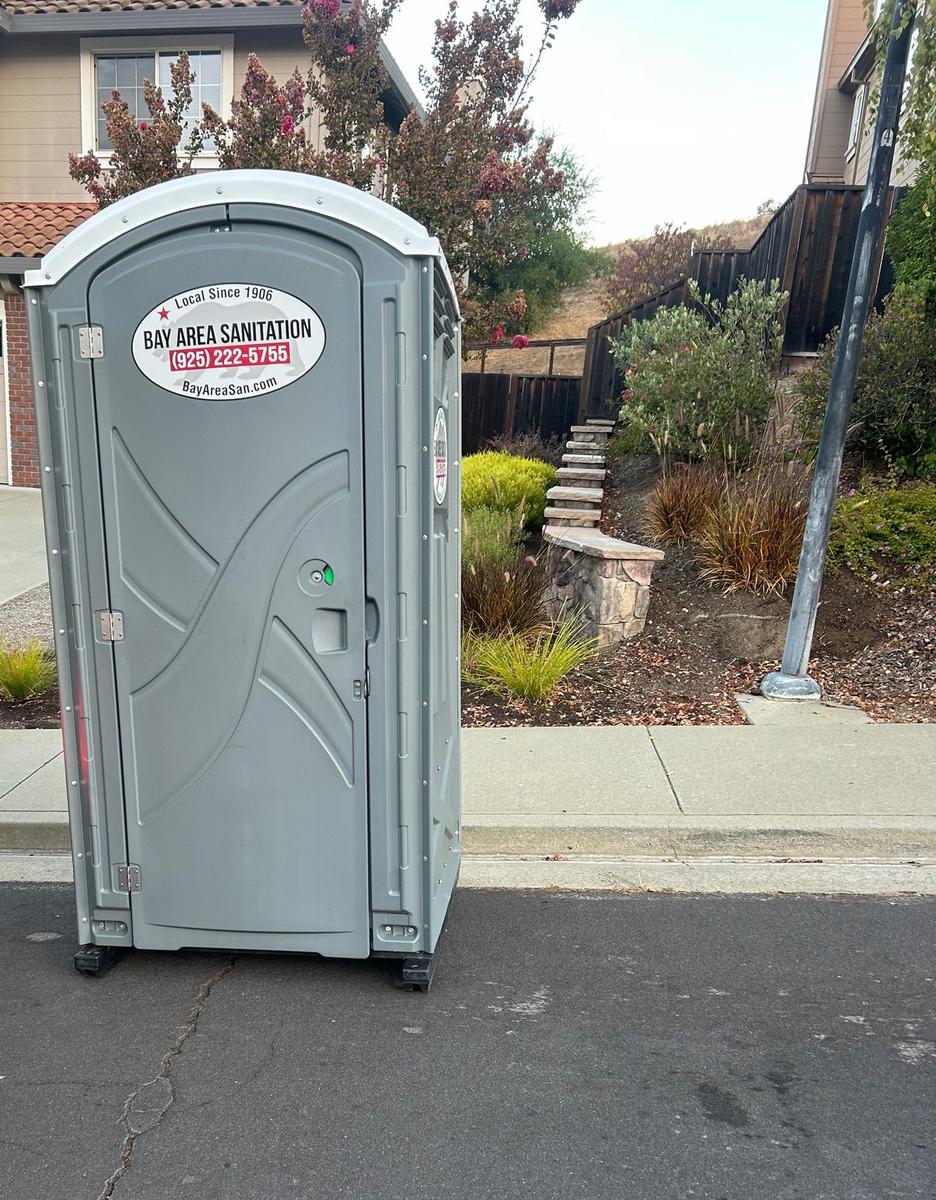
Do you need a permit for a porta potty in San Francisco?
Yes, if it goes on the sidewalk or street. San Francisco Public Works lists portable toilets by name among the things that need a Street Space permit for construction.
The Street Space permit covers construction-related use of the public right of way, including “placement of contractor offices, portable toilets, and/or equipment, debris boxes.” A few rules from that page that matter for a porta potty:
- You can only use the space in front of your own property.
- You can use half the sidewalk width or less, plus the designated parking lane.
- A clear walking path of at least four feet has to stay open at all times.
- Space is charged in 20-foot intervals. You can apply online or at 49 South Van Ness Avenue.
- To keep cars out of the space, you post tow-away no parking signs following Public Works’ process.
For short, non-construction uses, usually under seven days, San Francisco has a Temporary Occupancy permit that covers “all other temporary facilities.” Public Works asks you to allow up to five business days for processing. It requires a certificate of insurance and a site plan showing a four-foot path for pedestrians, or six feet in commercial areas. If you use the parking lane, the no parking signs have to be registered at least 72 hours ahead. Street closure events go through SFMTA first.
Do you need a permit for a porta potty in Oakland?
Yes, if it blocks a parking space, the curb, the sidewalk or a traffic lane. Oakland calls this an Obstruction Permit.
The City of Oakland’s Obstruction Permit page says you need one before blocking street parking, the curb and gutter, the sidewalk or a lane. No parking signs must be posted 72 hours ahead, and the sidewalk has to keep at least 5 feet 6 inches of clearance. A traffic control plan may be required. The page lists how to apply by email and the permit counter at 250 Frank H. Ogawa Plaza. We deliver throughout Oakland, and a driveway spot avoids the permit entirely.
Do you need a permit for a porta potty in San Jose?
Probably, if it goes in the public right of way. San Jose handles work in the street and sidewalk through encroachment permits. Call Public Works before you book.
The City of San Jose issues encroachment permits for construction in the public right of way. The page does not mention portable toilets by name, so call Public Works Development Services at (408) 535-3555 and ask which permit applies to your placement. In San Jose, as everywhere else, the easiest answer is a spot on private property within 25 feet of the street.
What about other Bay Area cities?
Most cities follow the same idea: private property is fine, public property needs a permit. Call your city’s public works or engineering department to confirm.
Ask them three things: whether a portable toilet in the parking lane or on the sidewalk needs a permit, how far ahead you have to apply, and whether you need to post no parking signs. If you are planning an event in a park, the parks department or special events office will tell you whether restrooms are part of your event permit. Some event permits also set a minimum number of restrooms. Our porta potty calculator gives you a starting count.
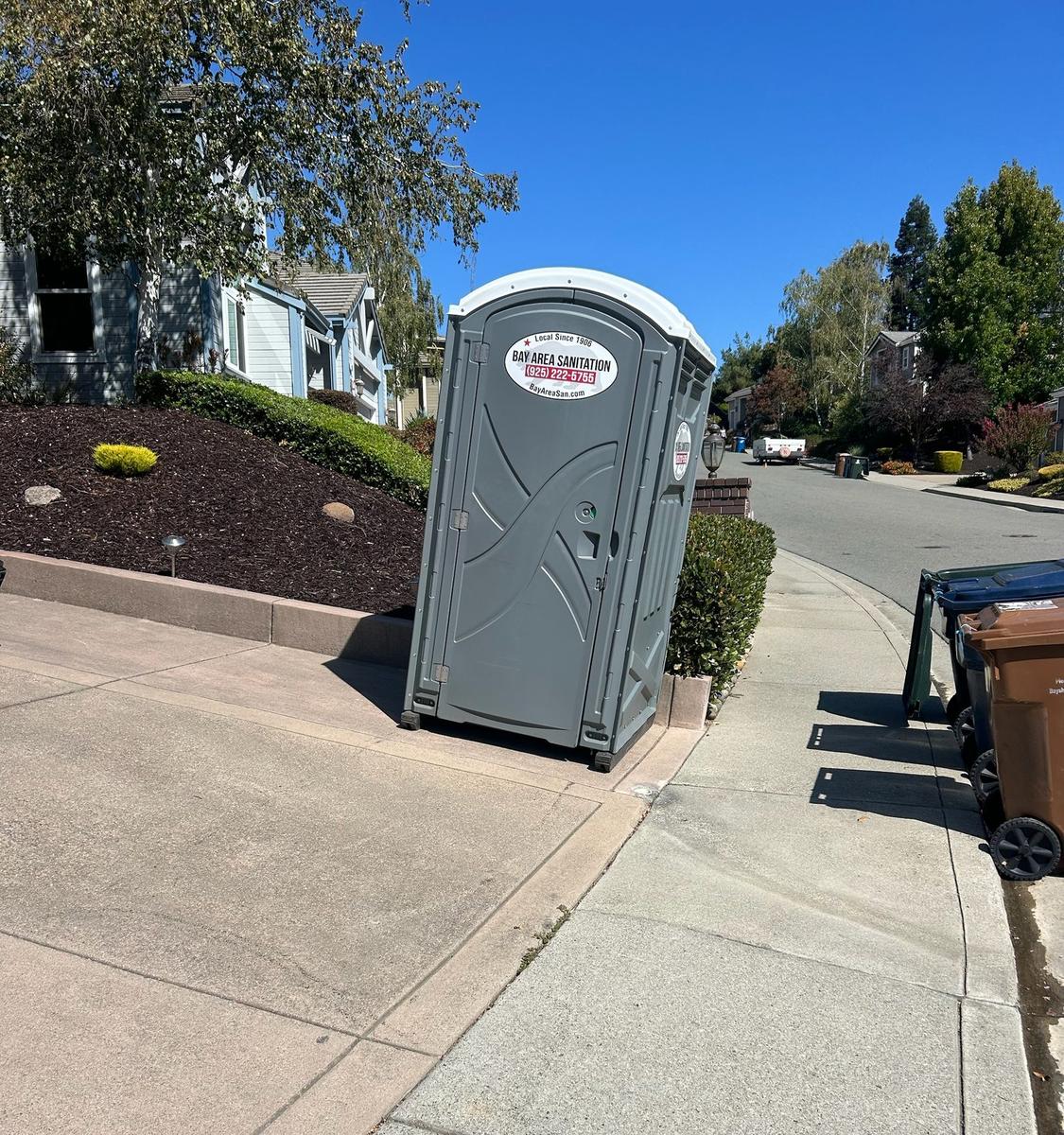
Who gets the permit, and what do I need before I apply?
You or your contractor do. We do not pull permits for customers. The permit is usually issued to the property owner, contractor or event organizer, since they are responsible for the space. Have your dates, the exact spot and a simple site plan ready.
Use this checklist before you call the city:
- Delivery and pickup dates. Our deliveries run 7 AM to 4 PM, Monday through Friday, with at least two business days of lead time.
- The exact spot, measured from the curb, and how much sidewalk will stay clear.
- The size of the unit. A standard restroom is about 43 inches wide and 47 inches deep. The products page lists sizes for every unit.
- A certificate of insurance, if the city asks for one.
- Your HOA’s approval, if you have one. Some HOAs do not allow porta potties at all, and some require a wooden enclosure or screen built around the unit so it cannot be seen.
Our terms and conditions also note that debris boxes need a city permit when they are placed on the street, and that units may not be moved into back or side yards without our consent. If you are planning a remodel, see our upcoming post on renting a porta potty for a home remodel.
Frequently asked questions
Do I need a permit to put a porta potty in my driveway?
Usually not. A driveway is private property. If you have an HOA, confirm it allows a porta potty before you book. Some do not, and some require a wooden enclosure around the unit.
Can a porta potty go on the sidewalk?
Only with a permit in most cities, and only if a clear path stays open for people walking by. San Francisco requires at least four feet, and Oakland at least 5 feet 6 inches.
Does Bay Area Sanitation get the permit for me?
No. We do not pull permits, so you will need to get it yourself. The permit is normally in the name of the person responsible for the property, project or event. Tell us where the unit needs to go when you book, and we can give you the unit size and delivery window for your application.
How long does a street permit take?
It depends on the city. San Francisco asks you to allow up to five business days for a Temporary Occupancy permit, plus 72 hours for no parking signs. Apply before you book delivery.
Do I need a permit for a porta potty at a park event?
Usually the restrooms are covered by your event or park use permit. Ask the parks or special events office, since some permits set how many restrooms you must provide.
Have the spot figured out? Send us the address and placement through our quote form.